The Pink Panther (2006)
A comedy that misreads its own humour and sabotages its best narrative strengths.

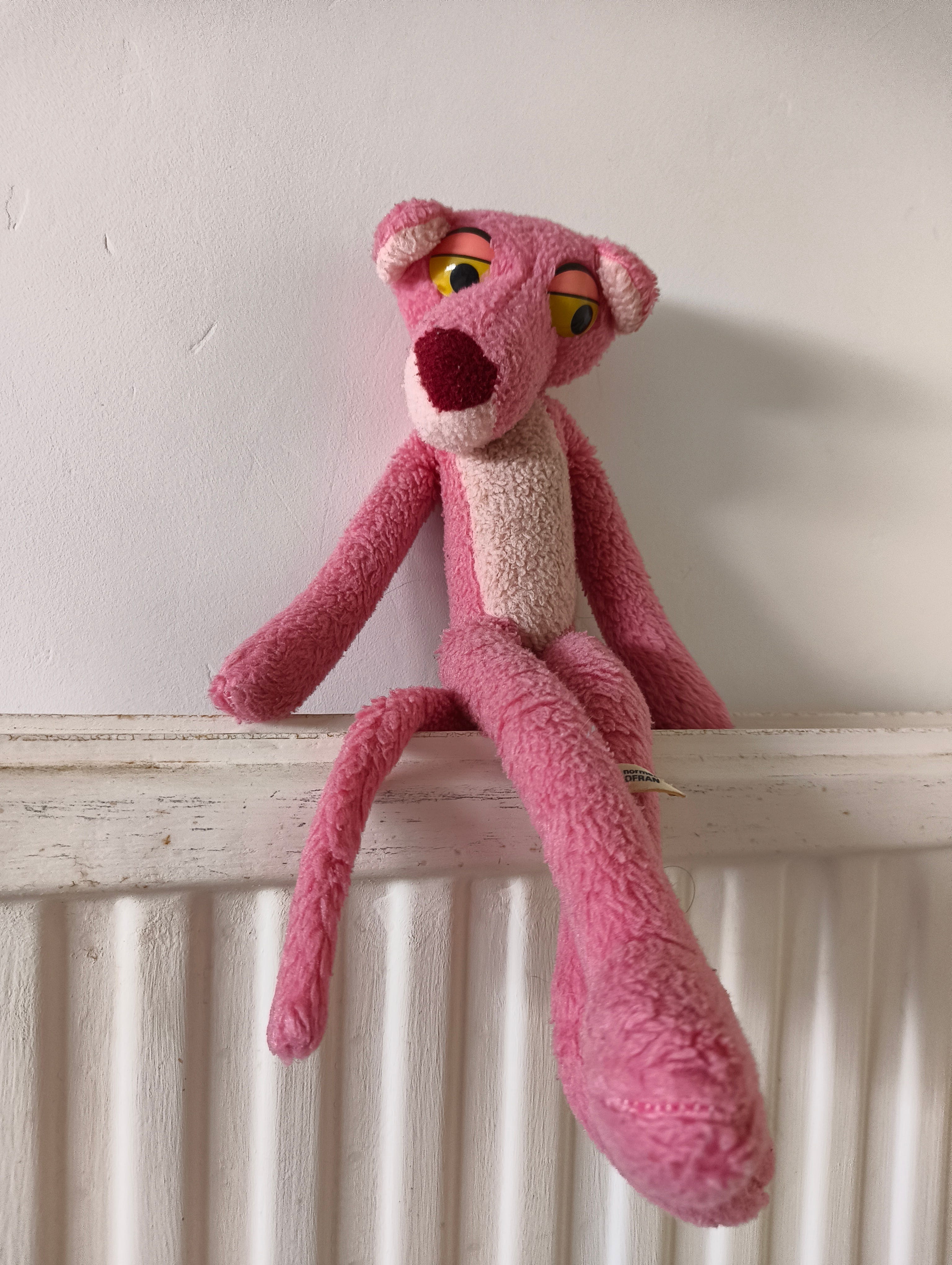
As a child, I had a Pink Panther character plush toy. It has been my only real exposure to the franchise, so, until recently, I thought the Pink Panther series was about a panther which happened to be pink. Netflix’s thumbnail told me I was wrong, but after watching this film, I wish I had been right.
In a film, I do not search quality through sound or image. The Pink Panther makes an unsettling choice for the premise, which affects a sound aspect. As the story happens in France and the characters are mostly French, they should all speak in English with a French accent. While it may be funny for the first few minutes, sustaining it for the entire duration becomes exhausting. It is consistent, but becomes quickly frustrating, in particular in some scenes where I could not understand Steve Martin’s Clouzeau heavily distorted ‘French’ pronunciation.
It sadly also has no sense in the logic of the film: the characters are supposed to speak in French with one another. It would be like if the characters from an American film, speaking English in the original version, spoke with an American accent in the dub for another language. They do not. If they were dubbed in English for comprehension, they should lose this accent, explain somehow that they are French and trust the viewer.
By some aspects, The Pink Panther clearly attempts to operate in the same register as The Naked Gun, using a not very clever police officer solving a case. If it does, The Pink Panther fails at two levels.
First, Clouzeau is self-confident and facially expressionless, unlike The Naked Gun’s Drebin, who recognises his errors yet pretends to dismiss them, supported by his abundance of funny faces. It makes Clouzeau one-dimensional and dull when Drebin is funny because of his unpredictability.
Second, Drebin is not always bright to the viewer. But he lives in an irrational world where people can be more intelligent in some way, and worse in another. So he is acceptable in his environment because he is aligned with it. Clouzeau, on the other hand, is also not astute, but lives in a world where people are rational. He is then out of sync with the other characters, which leaves him as the stupid one.
An out of sync character can work, like it did with 2008 Get Smart’s Maxwell Smart. It succeeds because Smart is likeable, in part because he is mostly clumsy and human, rather than just stupid. Clouzeau can be clumsy, but his lack of empathy and expressiveness fails to give him any likeability.
There is one scene I had a hard time watching, and as it sadly comes early, I was afraid it was an indication of the humour to come: Clouzeau, trying to help a gauche Nicole get down from a table, ends up standing with her sitting on his shoulders, her crotch in his face. They then try to solve the situation with him staggering through the room, projecting a PG15 or more rating act.
As mentioned earlier, this film is more than 20 years old. Maybe, at the time, it was acceptable, humour-wise. As of today, this very scene makes me uncomfortable, as I felt like I was watching a sexual harassment episode.
Fortunately, this is the only awkward moment I had, despite a later open jab at sexual harassment. It was done and gone so quickly I did not get the time to really think about it and labelled it more at another shot to the French culture.
I met the film climax with an element I had completely forgotten: the theft of the Pink Panther diamond. The story revolves so much around the murder, never really taking the time to return to the jewel, that its disappearance slipped my mind. This is a shame, when it is the actual title of the film. This kind of bait-and-switch is also hard to swallow as this is the first film in a series*.
The film’s biggest missed opportunity is not the humour, but the one place where it actually works: the investigation.
The investigation is actually well-crafted for a crime comedy, with clues leading from one to the next. It ends with Clouzeau arresting the culprit, but kills the moment with a joke, Clouzeau’s very specific knowledge which led him to know the killer identity before the unmasking. While it could have been acceptable, the knowledge is not touched upon before and too specific to feel believable. It comes then as a Deus Ex Machina, the kind of tool your hero’s quest should not rely on to reach its end, because it gives him an edge over the viewer. They should have the same level of information as the investigator to solve the case.
The film also has convincing elements it does not know what to do with. Like one character, played by the 1994 film Léon: The Professional’s Jean Reno. Reno’s character Ponton is not Léon material, but his acting is sincere (his face at the beginning of the interview of a Chinese woman caught me by surprise and made me chuckle). Strangely, as the only French actor in the main cast, he is the only one whose accent does not feel forced and is listenable.
His dancing scene may have also been the only moment I had a genuine laugh, overshadowing Steve Martin right beside him, also dancing. The gap between Ponton and Léon might have helped.
My issue is with Ponton’s respect for Clouzeau: it does not feel as earned as it appears, save for solving the case at the end. Maybe this respect was initially pushed by Clouzeau’s higher rank, but it did not feel sufficient to last.
So, are there some redeeming elements in this film? Thankfully yes. The cinematography is great. Every scene has a pleasing background and lighting is top-notch, costumes are well-crafted. I was also admiring at an early scene, when Clouzeau drives a car through Paris. It is the only small car, making it different, but it is also the only red one. The eye catches it quickly as it contrasts with all the other things on screen. It reminded me of the woman with the red dress from Matrix.
If the characters and direction are debatable, the acting is good. The actors are in character and invested in the film, in line with Reno.
Despite these positive points, as humour is supposed to be this film’s main appeal, it is not enough for me to consider the film a good one. As for its sequel, I am unsure I will take the risk watching it in the near future.
*: the film is a reboot from a series of films I have not watched. I only know some of them revolve around the Pink Panther diamond. I only hope it is not as relegated to the background as it is here.
Next week, I will watch Eurovision Song Contest: The Story of Fire Saga, released in 2020.
-- from the Evening Notes